

Have you ever heard a film producer or financier say, “I have access to half the financing”? It’s often followed by, “If you have the other half, we can do this.” I’ve heard this, many times. Words like these can be the start of a successful deal, or of a scheme to defraud. Take theContinue reading "Could UBS Have Stopped a “Con” on Investors in a Bull Durham Musical?"
16 Reasons Why? Producer Dana Brunetti Hits Detachment by Discovery from “Manhunt” Series
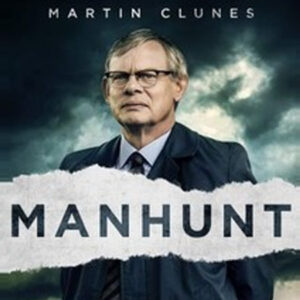
Film and TV projects start in various ways. Sometimes a producer will formally option a writer’s idea or work. But the process of working through a wide range of possible outcomes, as option agreements typically do, can exact a lot of brain damage – and cost – on a project that may never get toContinue reading "16 Reasons Why? Producer Dana Brunetti Hits Detachment by Discovery from “Manhunt” Series"
“Bones” Decision: Fox Hit With $128M Penalty; How Much Did the Studio Wrongly Hide from Profit Participants?

The hit TV series Bones (the “Series”), featuring a crime-solving, forensic anthropologist, ran from 2005 through 2017, a total of twelve seasons. It starred Emily Deschanel and David Boreanaz and was produced by Barry Josephson based on books by Kathy Reichs (collectively, the “Creatives”). At 246 episodes, Bones is one of the longest running one-hour prime time series ever.Continue reading "“Bones” Decision: Fox Hit With $128M Penalty; How Much Did the Studio Wrongly Hide from Profit Participants?"
The Walking Dead: Should AMC pay less than $2M Per Episode, or more than $20M?

Writer/director Frank Darabont is the creator of mega series The Walking Dead (the “Series”); talent agency Creative Artists is the Series’ packager; and AMC Studio is the producer and distributor of the Series, and licenses it for broadcast to the AMC Network.1 Plaintiffs Darabont and CAA, who share in the profits of AMC Studio, claim that theContinue reading "The Walking Dead: Should AMC pay less than $2M Per Episode, or more than $20M?"
Did Relativity Media Run a $100M “Romance Scam” on a Film Investor?
RKA Film Financing has sued a group of film executives and financiers claiming that they schemed with much-hyped film distributor Relativity Media to pull off a $100 million-plus fraud. Putting movie industry context side, RKA’s fraud allegation, in key respects, looks like a classic “Romance Scam”, in which the scammer: ** posts great-looking photos **Continue reading "Did Relativity Media Run a $100M “Romance Scam” on a Film Investor?"
“Bones” Complaints: Did Fox Properly Account for Hulu monies?

Twentieth Century Fox produces the hit TV series Bones for its broadcast network and also makes the series available on Hulu of which it is a one-third owner. Did Fox properly report and share monies it received from its license of Bones to Hulu? Two complaints recently filed by revenue participants claim it did not.1 The Big Picture AsContinue reading "“Bones” Complaints: Did Fox Properly Account for Hulu monies?"
Glen Larson TV Profits Dispute: If You Wait to Sue, How Long is Too Long?
Glen Larson produced some of the most successful television shows of the 1970s and 80s, including Quincy M.E., McCloud, Knight Rider and Battlestar Galactica. In 2011, he sued Universal Television, claiming that despite Universal’s having made “hundreds of millions of dollars” on shows which he produced, the company hadn’t paid him a penny in profits. But had Larson waited tooContinue reading "Glen Larson TV Profits Dispute: If You Wait to Sue, How Long is Too Long?"
The Walking Dead: Is AMC’s License Fee “Improper” and “Outrageous”?

What is a fair deal between a captive TV production company and a network parent? That may depend on who you ask. In a pending lawsuit, writer/director Frank Darabont, creator of mega TV series The Walking Dead, along with talent agency Creative Artists Agency, claim that AMC Entertainment and affiliates artificially lowballed license fees via aContinue reading "The Walking Dead: Is AMC’s License Fee “Improper” and “Outrageous”?"
Harlequin e-Books Royalty Case: A Dollar or a Dime?
In entertainment and media, sometimes business practices evolve more quickly than standard contracts. As recently as 2004, Harlequin Enterprises, the leading publisher of romance novels, did not specify a royalty rate for e-books in its author agreements. Rather, e-book sales were lumped into an “other rights” category originally intended for book clubs and other activitiesContinue reading "Harlequin e-Books Royalty Case: A Dollar or a Dime?"
Crash Profits Restated; Court Responds with “Big Interest”
Can a film company issue a participation statement, then later revise and reissue it, making major changes in its favor? If the changes are decidedly wrong, can there be consequences? Profit definitions typically give film companies an express right to correct mistakes, even retroactively. After all, mistakes get made. But on January 31, a CaliforniaContinue reading "Crash Profits Restated; Court Responds with “Big Interest”"
 Law Office of Ezra Doner